UNICEF: 3.8 Billion People Worldwide Still Lack Social Protection
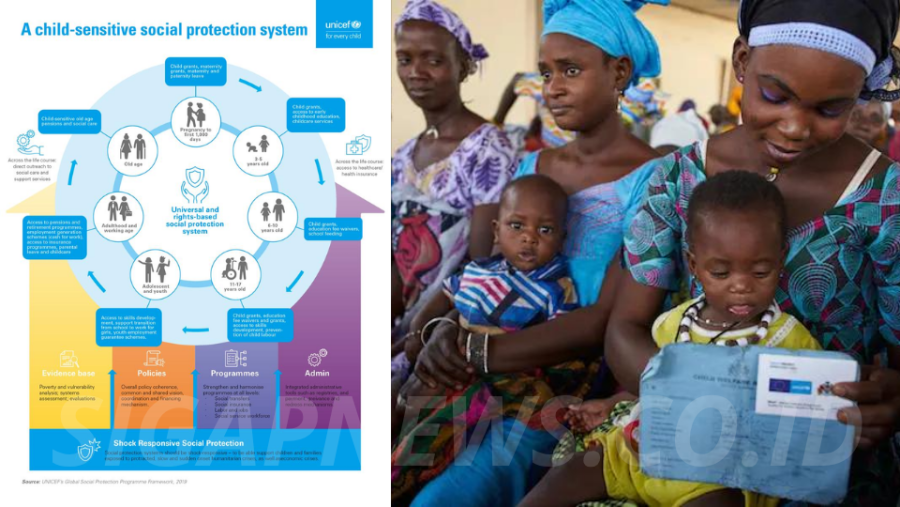
NEW YORK – Around 3.8 billion people worldwide remain without any social protection, despite global coverage surpassing half of the world's population for the first time, according to United Nations and International Labour Organization data highlighted by UNICEF in its 2026 outlook.
The ILO's World Social Protection Report 2024–26 found that 52.4 percent of the world's population received at least one social protection benefit in 2023, up from 42.8 percent in 2015. Despite that progress, approximately 3.8 billion people, or 47.6 percent of the global population, remained completely unprotected.
UNICEF has identified the gap as a major challenge for children and families. Its Prospects for Children in 2026 report warned that social protection systems are under growing pressure from climate shocks, increasingly insecure forms of work and severe fiscal constraints.
“Social protection systems now reach about half the global population,” UNICEF said, while warning that 3.8 billion people remain without any meaningful protection.
Children are among the most vulnerable groups. UNICEF estimates that approximately 1.4 billion children currently lack social protection. Without adequate support, children and families can become more exposed to poverty, food insecurity, income losses, climate disasters, conflict and disruptions to education and healthcare.
The global gap is particularly stark between income groups. According to United Nations data, high-income countries have social protection coverage of around 85.9 percent, compared with only 9.7 percent in low-income countries. Among children, just 28.2 percent receive a family or child benefit.
The ILO warned that maintaining the current pace of expansion would mean waiting until around 2073 to achieve universal coverage worldwide. The situation is even more severe in countries most exposed to climate change: only about 25 percent of people in the 50 most climate-vulnerable countries are effectively covered by social protection.
Financing remains another major obstacle. United Nations data indicates that low- and middle-income countries would need an additional $1.4 trillion annually to establish basic social protection floors.
UNICEF reported that in 2025, cash-transfer programmes supported by the organization reached more than 137 million children in 70 million households across 87 reporting countries. The assistance was designed to help families meet essential needs while strengthening national social protection systems.
The issue is becoming increasingly urgent as countries confront overlapping pressures from climate change, conflict, inflation, labour-market transformation and fiscal constraints. UNICEF has warned that social needs are rising at a time when governments in some low-income countries have less fiscal space to respond.
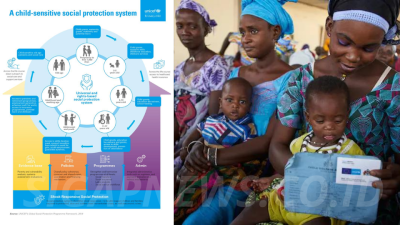
International organizations are therefore calling for social protection systems that are universal, adaptive and shock-responsive, allowing governments to protect vulnerable households not only after a crisis occurs, but before and during economic, climate and humanitarian shocks.
Editor :Farros
Source : UNICEF, ILO, United Nations Statistics Division, UN Department of Economic and Social Affairs, Unite