Indonesia Wildfire Threat Persists Despite Drop in Hotspots
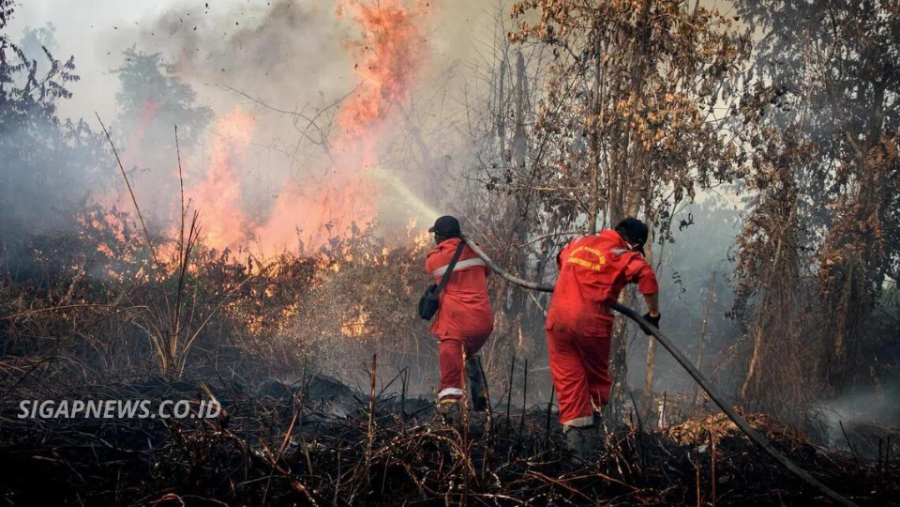
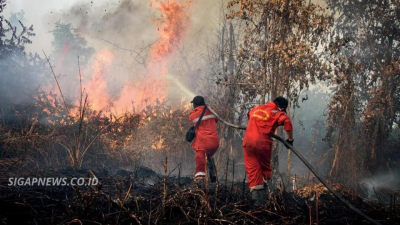
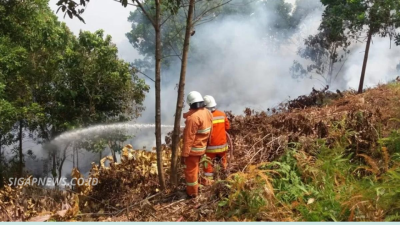
Officials are fighting forest and land fires in Indonesia amid persistently dry weather conditions.
JAKARTA – Indonesia’s forest and land fire threat remains high despite a recent decline in hotspots. The Forestry Ministry recorded 527 high-confidence hotspots nationwide as of Sunday (Oct. 4, 2026), down from 666 a day earlier.
The decline has not prompted authorities to ease their vigilance. Ground and aerial firefighting operations remain in place as wildfire conditions can quickly change depending on weather, land conditions and human activity.
Among six priority provinces, Central Kalimantan recorded an increase in high-confidence hotspots, rising from 96 to 116. South Sumatra fell sharply from 254 to 75, while West Kalimantan declined from 26 to 19 and South Kalimantan from 18 to 15. Riau and Jambi recorded no high-confidence hotspots in the latest monitoring period.
The Forestry Ministry has also stressed that a hotspot should not automatically be interpreted as an actual fire or a measure of burned land. Satellite-detected hotspots indicate surface temperature anomalies and must be verified on the ground.
Peatlands Remain Highly Vulnerable
Peatlands remain one of Indonesia’s biggest wildfire risks. Fires in peat can smoulder beneath the surface, making them difficult to detect and extinguish. Underground embers can also reignite after surface flames have disappeared.
Reuters reported that environmental group Pantau Gambut estimates around 16 million hectares of Indonesia’s 24 million hectares of peatland have become more vulnerable to fire because of ecosystem degradation, including deforestation and falling water tables. Only about 3% of peatland damaged by fires between 2015 and 2019 has been restored into forest, according to the group.
Weather conditions remain another concern. Indonesia’s Meteorology, Climatology and Geophysical Agency (BMKG) said relatively dry atmospheric conditions were still affecting parts of the country in early October. It recorded 1,474 areas experiencing extremely long rain-free periods through the second ten-day period of September. BMKG also projected low rainfall across about 79.65% of Indonesia during the first ten days of October.
Smoke Spreads Beyond Indonesia
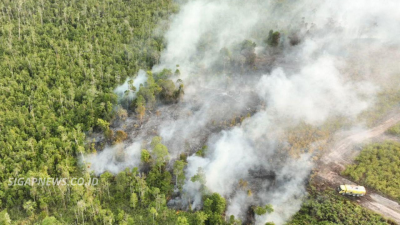
The impact of the fires extends beyond the burned areas. Smoke from Indonesian wildfires has affected air quality in several regions and reached neighbouring Malaysia and Singapore. Reuters reported that air pollution in Palembang, South Sumatra, had exceeded an index level of 1,000, considered extremely hazardous.
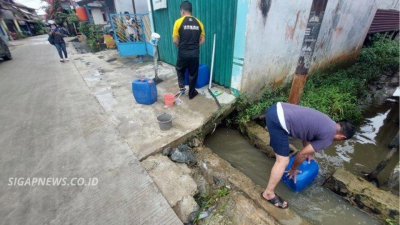
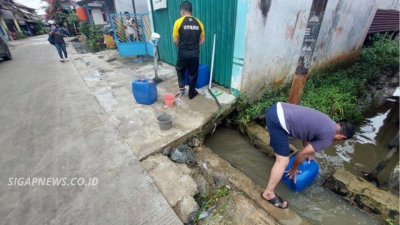
In Borneo, dry conditions have also contributed to a water crisis. The Associated Press reported that communities faced severe water shortages after months without significant rain, while degraded peatlands have reduced the landscape’s ability to retain water.
Authorities continue to conduct firefighting, patrols, wetting, cooling and ground verification operations. The decline in hotspots is a positive development, but it does not mean Indonesia’s wildfire season is over.
The bigger challenge is now clear: Indonesia must not only put out existing fires, but also restore damaged peatlands, maintain water levels and prevent fires from returning when dry conditions intensify again.
Editor :Farros
Source : Kementerian Kehutanan, BMKG, Reuters, Associated Press.