Rome Unveils Giant Mosaic Hidden for 2,000 Years
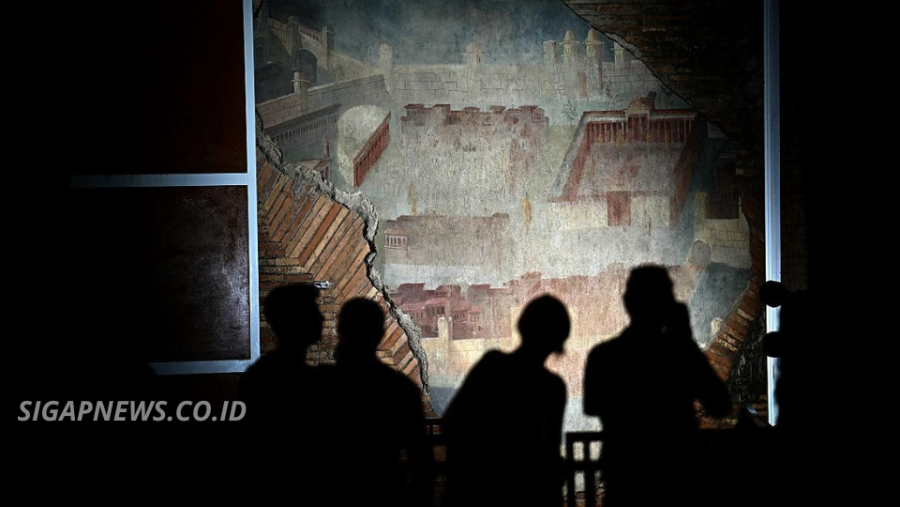
ROME – A monumental Roman mosaic has been unveiled to the public in Rome, Italy, nearly 2,000 years after it was created and buried underground.
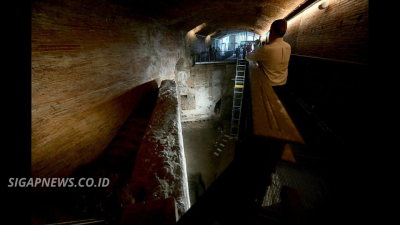
Known as the Great Mosaic, the artwork forms part of a newly restored archaeological complex beneath the Baths of Trajan on Oppian Hill, close to the Colosseum. The mosaic dates to the first century AD and reaches roughly 15 meters in height.
The artwork was discovered during archaeological excavations in the 1990s, alongside a remarkable fresco known as the Painted City. Both works have now undergone extensive conservation and are being presented to visitors for the first time.
The Great Mosaic contains elaborate architectural details, human figures and theatrical imagery. The nearby Painted City depicts a walled settlement filled with buildings and towers from a bird’s-eye perspective.
Researchers believe the imagery may represent a maritime or port city, although the exact identity of the city remains uncertain. The artwork therefore offers more than an artistic spectacle: it provides clues about how Roman society imagined urban landscapes almost two thousand years ago.
The discovery also highlights the layers of history beneath modern Rome.
The Baths of Trajan were dedicated in 109 AD and became the largest bath complex in the world at the time. Designed by architect Apollodorus of Damascus, the monumental complex was built over an earlier area associated with Emperor Nero’s Domus Aurea.
Rome has now restored not only the ancient artworks but also the underground gallery and monumental spaces surrounding them. The project was carried out as part of the PNRR–Caput Mundi restoration program.
Public access is currently being introduced on a limited basis. Visitor numbers are being controlled because the underground environment, particularly humidity, can affect the preservation of the ancient artworks.
After nearly two millennia beneath the ground, Rome’s ancient artwork is finally returning to public view — revealing another extraordinary chapter of the city’s long history.
Editor :Farros
Source : Associated Press, Smithsonian Magazine, Comune di Roma, Euronews, Turismo Italia News.