Total Solar Eclipse Turns European Skies Dark on August 12
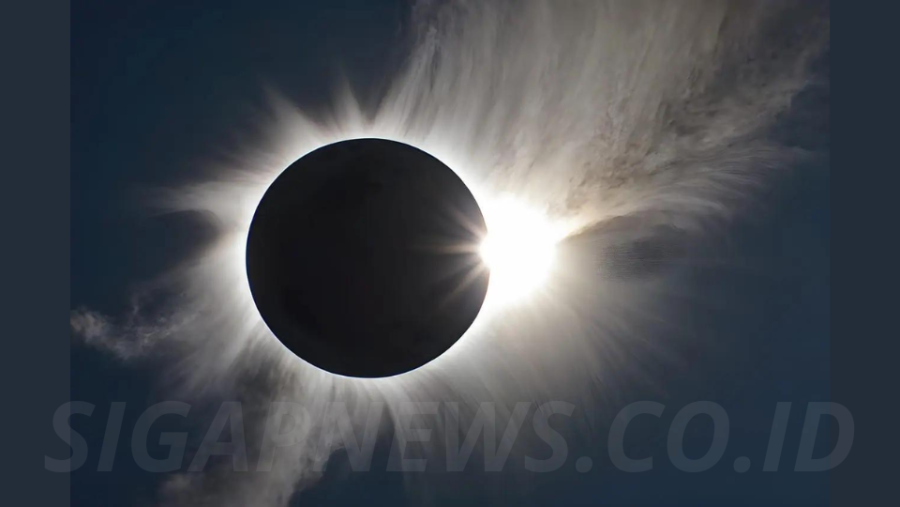
MADRID – A total solar eclipse crossed parts of Europe on Wednesday, August 12, 2026, briefly turning daylight into darkness as the Moon completely blocked the Sun along a narrow path stretching from Greenland and Iceland to northern Spain and a small part of Portugal.
The rare celestial event drew skywatchers across Europe, particularly in Spain, where the eclipse marked the first total solar eclipse visible from the mainland in more than a century. Spain’s National Geographic Institute (IGN) said the path of totality crossed the Iberian Peninsula from west to east, passing through cities including A Coruña, Bilbao, León, Zaragoza and Valencia.
A total solar eclipse occurs when the Moon moves directly between Earth and the Sun and completely covers the Sun’s bright disk for observers inside the path of totality. During those brief moments, the Sun’s outer atmosphere, known as the corona, becomes visible.
The European Space Agency (ESA) described the event as an “impressive spectacle” and organized scientific observations and public activities around the eclipse. The agency said Spain offered the largest area of totality in Europe during this event.
NASA said the total eclipse crossed Greenland, Iceland, the Atlantic Ocean, Spain and a small corner of Portugal. A much wider region experienced a partial eclipse, including most of Europe, northwestern Africa, Canada and parts of the northern United States.
The eclipse reached its maximum near Iceland, where totality lasted up to 2 minutes and 18 seconds. In Reykjavík, totality lasted roughly one minute, while several cities in northern Spain experienced the event during the late afternoon and evening, close to sunset.
Spain’s IGN noted that the Sun was positioned relatively low above the horizon during totality. In A Coruña, totality lasted about 76 seconds, while Burgos experienced approximately 104 seconds of total darkness. Clear western horizons were therefore particularly important for observers.
Beyond its visual appeal, the eclipse provided scientists with an opportunity to study the solar corona and Earth’s atmosphere. ESA organized observation activities, while astronomy organizations and space agencies prepared maps, schedules and live broadcasts for audiences around the world.
NASA warned that viewers must continue using certified solar viewing glasses or other safe solar-viewing equipment during the partial phases. Direct viewing without eye protection is safe only during the brief period of totality, when the Sun’s bright disk is completely covered by the Moon.
For Spain, the August 12 eclipse carries particular historical significance. The next total solar eclipse visible from Spain will occur on August 2, 2027, while another total eclipse will not be visible from the country again until 2053.
Editor :Farros
Source : NASA, European Space Agency (ESA), Instituto Geográfico Nacional Spanyol, Reuters, The Guardian, AL