Countries Strengthen Global Ocean Monitoring System
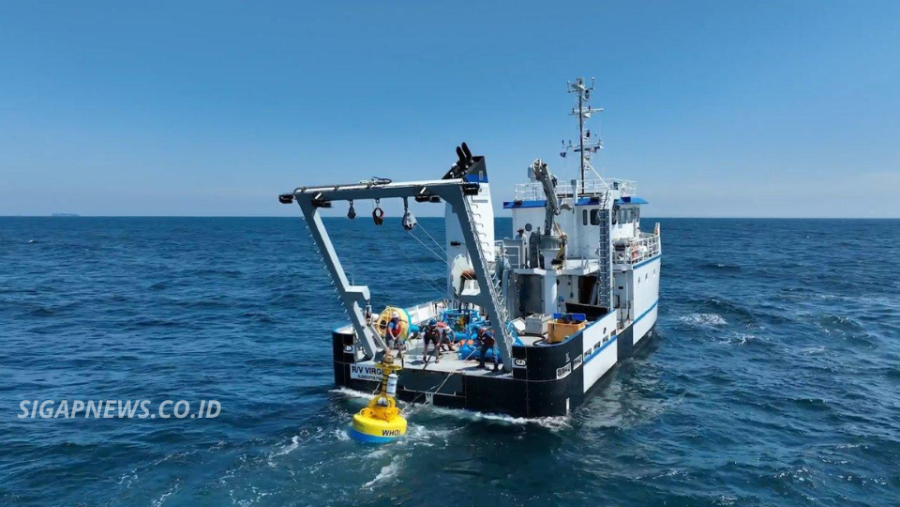
JAKARTA – Countries are strengthening international cooperation to monitor the world’s oceans through the launch of the OceanEye International Alliance for the Global Ocean Observing System (GOOS) during the 81st United Nations General Assembly in New York in September 2026.
The alliance was launched by the European Union and Canada in partnership with UNESCO’s Intergovernmental Oceanographic Commission (IOC-UNESCO) and the World Meteorological Organization (WMO). At the launch, 31 members had joined the alliance, including the EU, Canada and 29 other countries.
Partners have so far pledged more than US$339 million, or approximately €211 million, to strengthen global ocean observation. The European Union pledged an additional €92 million, while Canada committed CAD$82 million over five years to expand its ocean-observation capabilities.
The funding and in-kind support will help maintain existing observation platforms, expand monitoring capacity, close critical data gaps and strengthen international coordination and data management.
GOOS is already a major part of the world’s ocean-monitoring infrastructure. The system coordinates around 120,000 ocean observations every day from approximately 8,000 platforms operated by 64 countries and 17 global observation networks.
The information collected goes far beyond marine research. Data on ocean temperatures, currents, waves, sea levels and marine life contribute to weather forecasting, early-warning systems, climate projections, maritime safety, coastal protection, fisheries management and marine biodiversity conservation.
However, the global observing system still faces a major funding challenge. The European Commission says around 90 percent of global observations are currently funded by just nine countries, leaving the system vulnerable to disruptions in long-term financial support.
Important observation gaps also remain in areas including the Southern Ocean, polar regions and the deep ocean. Better coverage of these areas is considered essential for understanding global climate and ocean changes.
Through OceanEye, participating countries aim to build a more stable, coordinated and accessible global ocean-observation system. The international mobilization is expected to continue throughout 2026–2028 and beyond, including at future international meetings such as COP31.
The push comes as oceans face growing pressure from climate change, pollution and ecosystem degradation. More consistent and widely shared observations could give scientists and governments a stronger evidence base for understanding these changes and developing policies to protect the marine environment.
Editor :Farros
Source : UNESCO-IOC, World Meteorological Organization (WMO), European Commission, Government of Canada, VLIZ