African Migration to Europe Surges, Straining Spain’s Emergency Services
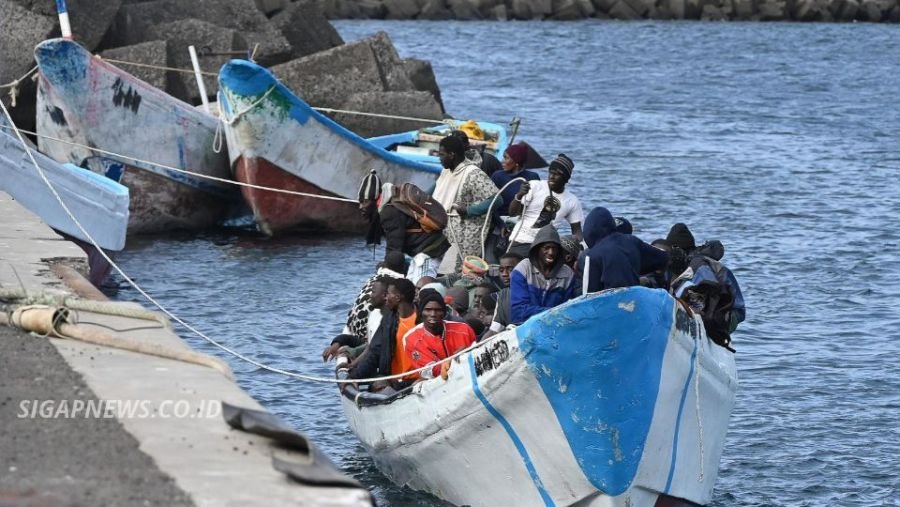
The migrants arrived at the port of La Restinga on the island of El Hierro.
MADRID – A sharp increase in migrants arriving from West Africa to Spain’s Canary Islands in November 2026 has placed growing pressure on reception facilities, healthcare services and local rescue teams. Spain has declared a migration emergency in the archipelago as thousands of people continue to reach the islands through the Atlantic route.
Spanish government figures reported by the Associated Press (AP) show that more than 11,000 migrants reached the Canary Islands during the first 15 days of November. The figure represents more than half of the total arrivals recorded throughout 2025.
The surge has been particularly concentrated on El Hierro, one of the main entry points for migrants departing from West Africa. The island, with a population of around 12,000, has limited facilities to accommodate and assist the growing number of arrivals.
On November 15, Spain’s maritime rescue service rescued 1,488 people from 14 boats in a single day. It was the highest daily rescue total since November 2020, when 1,461 people were rescued within a 24-hour period.
Those arriving included people from several West African countries, particularly Senegal, Gambia and Guinea. Women and children were among the passengers travelling in wooden fishing boats and other small vessels with limited capacity.
Reception and Healthcare Services Under Pressure
The rising number of arrivals has forced local authorities to deploy additional medical personnel and redirect transport resources to support migrant operations. Emergency teams have also faced urgent demands for medical checks, food, clean water, shelter and assistance for vulnerable groups.
Earlier in November, Fernando Clavijo, president of the Canary Islands regional government, described the situation on El Hierro as increasingly difficult to manage. He called on Spain’s central government to provide additional support, saying the island’s available services were struggling to cope with the number of arrivals.
The Spanish government subsequently announced measures to expand reception capacity and provide additional funding. Regional authorities have also called for stronger coordination with Madrid and the European Union.
The Atlantic Route Remains Highly Dangerous
The migration route from West Africa to the Canary Islands is considered one of the world’s most dangerous sea crossings. Migrants face long journeys in often overcrowded boats, exposed to powerful currents, rough seas and changing weather conditions.
The International Organization for Migration (IOM) has recorded hundreds of deaths and disappearances along the West African Atlantic route in 2026. The figures underline the serious humanitarian risks associated with the increase in crossings.
The November surge followed a period in which arrivals to the Canary Islands had declined during parts of the year. More favourable sea conditions during the autumn months have also contributed to increased departures from West African coastlines.
Migration, however, is not solely a matter of border control. Poverty, limited employment opportunities and instability in some countries of origin remain among the factors driving people to seek better living conditions in Europe.
The situation in the Canary Islands has once again placed migration at the centre of humanitarian and policy challenges facing Spain and the European Union. A long-term response will require cross-border cooperation, protection for migrants and efforts to address the conditions pushing people to leave their home countries.
Editor :Farros
Source : Reuters, Associated Press (AP), Al Jazeera, Africanews, Le Monde, International Organization for Mig