Deep-Sea Brine Pools in the Red Sea Preserve Evidence of Ancient Tsunamis and Earthquakes
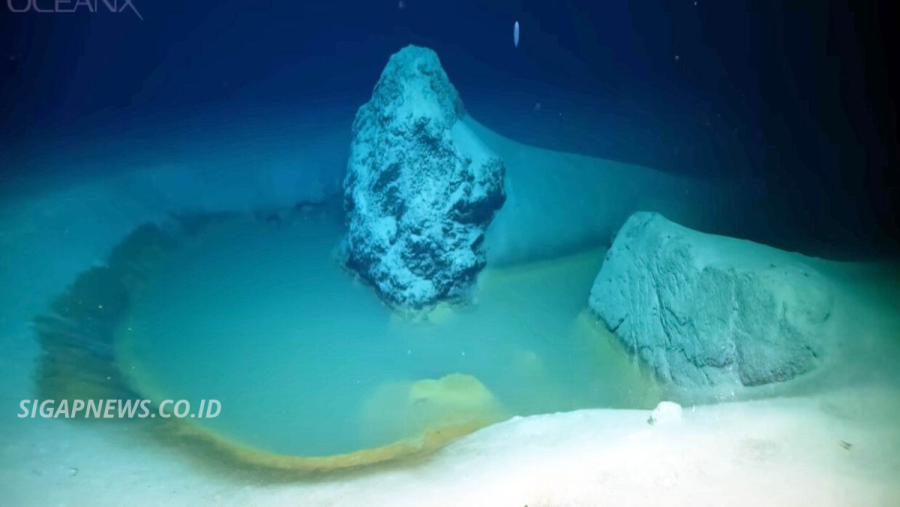
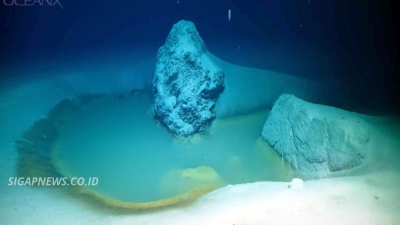
Research on NEOM’s saltwater basin in the Gulf of Aqaba has revealed an extreme underwater environment at a depth of approximately 1,770 meters.
GULF OF AQABA – Extreme underwater brine pools located approximately 1,770 metres beneath the Red Sea contain important clues about the region’s geological history. The findings by researchers from the University of Miami and an international research team have drawn renewed attention following their republication in November 2026.
Known as the NEOM Brine Pools, the formations are located in the Gulf of Aqaba, a northern extension of the Red Sea bordered by Saudi Arabia and the Sinai Peninsula. They are not freshwater lakes but underwater depressions filled with extremely salty water, commonly known as brine pools.
The research, led by Sam J. Purkis of the University of Miami’s Rosenstiel School of Marine, Atmospheric, and Earth Science, identified one main pool covering approximately 10,000 square metres, alongside three smaller pools measuring less than 10 square metres each.
The team used a remotely operated vehicle (ROV) deployed from the research vessel OceanXplorer during an expedition in 2020.
The findings were published on June 27, 2022, in the scientific journal Communications Earth & Environment. The study marked the first documented discovery of deep-sea brine pools in the Gulf of Aqaba.
The pools have unusual environmental characteristics. Their water contains exceptionally high salt concentrations, reaching approximately 160 practical salinity units (PSU), far above normal seawater levels. The environment is also almost entirely devoid of oxygen.
Despite these harsh conditions, researchers identified communities of microorganisms capable of surviving in the pools. Their presence offers scientists an opportunity to investigate the limits of life on Earth.
Sam Purkis has explained that understanding the extreme conditions in which life can survive may help researchers assess the possibility of organisms existing in environments beyond Earth.
However, the discovery does not constitute evidence of extraterrestrial life. Instead, it expands scientific understanding of the environmental conditions that can support living organisms.
Beyond their biological significance, the brine pools serve as natural archives of geological history. Their highly saline and oxygen-poor conditions help preserve sediment layers on the seabed.
Sediment analysis revealed geological records spanning at least 1,200 years. These layers contain evidence associated with flash floods, local seismic activity and tsunami-related deposits.
The pools are located only about two kilometres from the coastline, allowing sediment from land to reach the seabed and accumulate over time. These deposits provide researchers with valuable material for reconstructing past environmental and geological events.
The findings could help scientists better understand the history of natural hazards around the Gulf of Aqaba, including coastal areas of Saudi Arabia and Egypt. Knowledge of past geological activity may also contribute to assessments of risks facing coastal development.
The research demonstrates that the deep sea still holds significant information about Earth's past. Beyond offering insights into microbial life in extreme environments, the brine pools provide scientists with a valuable record of geological processes and environmental changes over centuries.
Editor :Farros
Source : University of Miami Rosenstiel School of Marine, Atmospheric, and Earth Science, Communications Eart