NASA Artemis II Sets New Record After Lunar Far Side Flyby
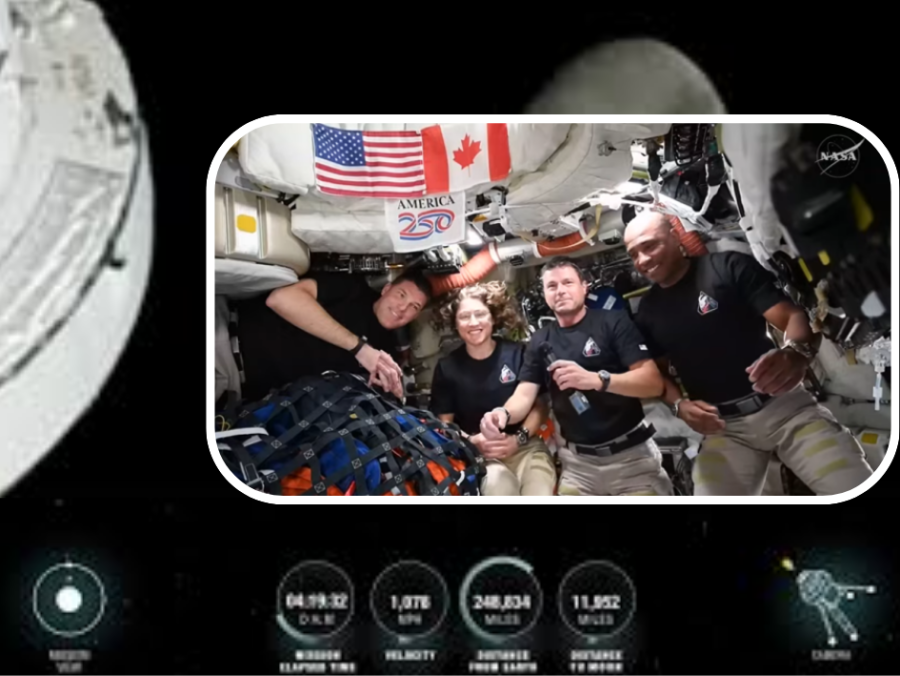
Cape Canaveral, FL – November 26, 2025: NASA’s Artemis II mission has made history as four astronauts return safely to Earth after completing a flyby of the Moon’s far side, marking humanity’s farthest journey from home in modern space exploration, according to reports from NASA and Reuters.
“The Artemis II crew has reached a milestone that brings us closer than ever to the Moon’s south pole,” said NASA Administrator Bill Nelson. “This mission demonstrates American leadership in space and sets the stage for the next generation of lunar exploration.”
The spacecraft, carrying astronauts aboard Orion, passed behind the Moon’s far side before heading back to Earth.
The mission, lasting nearly three weeks, achieved several technological firsts, including testing autonomous navigation systems and high-bandwidth communications in deep space, according to NASA officials.
“This flyby is more than a record-breaking achievement,” said flight director Lisa Watson. “It is a critical step toward our planned human landing at the lunar south pole within the next few years.”
Global space agencies and analysts have closely followed Artemis II, framing it as a symbolic benchmark in the ongoing international space race. China’s lunar exploration programs and other global initiatives underscore the geopolitical and technological significance of Artemis II’s success.
“The Artemis II mission highlights the growing competition in lunar exploration,” said Dr. Martin Koehler, a space policy expert at the European Space Policy Institute. “It is also accelerating investments in space technology, artificial intelligence for autonomous missions, and international collaborations.”
Beyond geopolitical significance, the mission has inspired public interest in science and space travel worldwide. Educational and outreach programs linked to Artemis II have reported record engagement, demonstrating NASA’s ability to combine cutting-edge exploration with global public engagement.
NASA’s next step involves Artemis III, which aims to land astronauts on the Moon’s south pole, with particular emphasis on sustainable lunar operations, resource utilization, and long-term research infrastructure. Artemis II provides critical data for ensuring astronaut safety and mission success.
“The far side of the Moon may be mysterious and uncharted, but Artemis II has shown that humanity is ready for the challenges of deep space exploration,” Nelson added.
Editor :Farros
Source : NASA, Reuters, European Space Policy Institute