South Africa Hosts First G20 Summit on African Soil Amid US Boycott
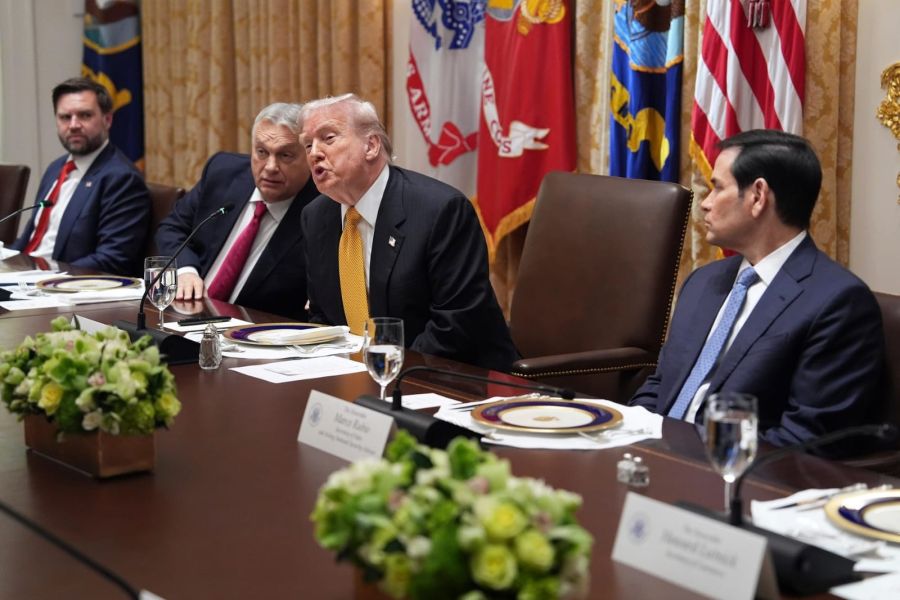
President Donald Trump addresses reporters during a meeting with Hungarian Prime Minister Viktor Orban, while Vice President JD Vance and Secretary of State Marco Rubio observe in the White House Cabinet Room on Nov. 7, 2025. Photo by Evan Vucci/AP.
JOHANNESBURG — South Africa hosted the first G20 summit ever held on African soil on November 22–23, 2025, in Johannesburg, bringing together global leaders to push issues central to developing nations, according to reports from Al Jazeera. The historic gathering opened as President Cyril Ramaphosa vowed to elevate the priorities of the Global South.
“We want the concerns of Africa and developing countries to be heard and acknowledged,” Ramaphosa said in his opening address, as quoted by Al Jazeera.
The milestone summit unfolded under a diplomatic shadow after the United States announced a full boycott of the event. According to AP News, the decision stemmed from political tensions between Washington and Pretoria, prompting sharp criticism from South African officials.
Despite the absence of the US delegation, South Africa confirmed that the Leaders’ Declaration was adopted at the beginning of the summit, an unusual move that broke from traditional G20 practice. Presidential spokesperson Vincent Magwenya told AP News that the declaration was finalized “despite opposition from the United States.”
Security measures in Johannesburg were tightened significantly ahead of the high-level meeting. According to the South African government’s NATJOINTS security structure, the area surrounding the conference venue entered a “soft lockdown” ahead of the summit, while a stricter “hard lockdown” ran from November 21 to 24 to safeguard world leaders.
On the policy front, South Africa earlier launched a special G20 task force chaired by Nobel laureate Joseph Stiglitz to examine global wealth inequality, Reuters reported. In parallel, the B20 South Africa group submitted 30 policy recommendations aimed at fostering inclusive growth and sustainable development.
World leaders continued arriving despite the US absence. Chinese Premier Li Qiang was among the first to land in Johannesburg, a move analysts interpreted as a signal of China’s deepening engagement with the Global South. According to Anadolu Agency, the boycott by Washington underscored shifting geopolitical dynamics, with rising expectations for developing countries to claim more influence in global governance.
Analysts told AfricaNews that beyond symbolism, Africa’s first G20 summit could shape long-term reforms in global finance, green investment, and development partnerships. Many observers view the summit as a pivotal test for multilateralism at a time when global power balances continue to shift.
As the summit concluded, South Africa emphasized that the event marked a turning point both for the continent’s global standing and for the broader push to make international decision-making more inclusive.
Editor :Farros
Source : AP News, Reuters, Al Jazeera, Politico, SAnews.gov.za, Anadolu Agency, AfricaNews, B20 South Africa