Whales Return to Patagonia After Decades, but New Threats Emerge

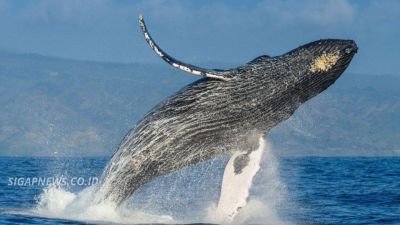
Humpback whales have once again been spotted in the waters of the Beagle Channel in Patagonia, Argentina, following an increase in their sightings in recent years.
PATAGONIA, ARGENTINA – Humpback and sei whales are showing signs of recovery in the waters of Patagonia and the Beagle Channel in Argentina after decades of decline caused by commercial whaling. However, the return of these marine giants now faces new threats, including climate change, shipping activity, krill fishing and offshore oil and gas development.
A Mongabay report published on November 27, 2026, said humpback whales have returned to the Beagle Channel at Argentina’s southern tip to feed. A local monitoring initiative has identified 208 individual whales since 2013 and recorded a steady increase in sightings since at least 2018.
One of the identified whales is a female named Shima, which has returned to the channel for eight consecutive years. A young male named Buddha was also spotted again after several years without sightings.
A collaborative analysis in 2025 identified 22 humpback whales in the channel, 17 of which were recorded in the catalogue for the first time. Researchers identify individual whales through distinctive patterns and markings on their tail flukes, using photographs submitted by boat crews, tour guides, photographers and visitors.
The whales visit the Beagle Channel to feed mainly on squat lobsters and small fish. However, the increase in sightings also raises the risk of encounters with vessels, including tourist boats and cruise ships travelling along routes to Antarctica.
Humpback whales are not the only species returning to the region. Endangered sei whales have also been recorded again in the San Jorge Gulf in Patagonia after being largely absent from the area for nearly a century because of intensive commercial hunting.
Over the past 15 years, the sei whale population in the area has shown a historical recovery. To study their movements, researchers have fitted two individuals with satellite tracking devices. Initial data indicate that the whales use the San Jorge Gulf as a feeding ground between October and June before migrating north towards southern Brazilian waters, where they generally breed.
Sei whales feed on small crustaceans, including squat lobsters and copepods, as well as small pelagic fish. Tracking data are expected to help scientists map important habitats, develop marine protection measures and improve the management of whale-watching activities.
The whales’ return to Patagonia is a sign that marine conservation measures can deliver results. The international moratorium on commercial whaling, which took effect in 1986, has contributed to the recovery of several whale populations, although numbers have not fully returned to pre-industrial whaling levels.
Scientists warn, however, that this recovery is not yet secure. Rising ocean temperatures linked to climate change may affect food availability, while the expansion of krill fishing in Antarctica could reduce an important food source for whales and other marine wildlife.
Shipping activity is another concern. Increased vessel traffic raises the risk of collisions with whales and underwater noise pollution, which can interfere with marine mammals’ communication and behaviour. Meanwhile, plans to expand offshore oil and gas activities in Argentina’s San Matías Gulf have raised concerns about potential pollution and ecosystem disruption.
Researchers say monitoring through photography, drones and satellite tags is essential to understanding whale migration routes and feeding grounds. The resulting data could also support the establishment of marine protected areas and stronger shipping regulations.
The return of whales to Patagonia is encouraging news for marine biodiversity. However, the long-term success of their recovery will depend on the ability of governments, scientists, fishing industries and shipping operators to address the growing pressures on their ocean habitats.
Editor :Farros
Source : Mongabay, Reuters, The Guardian, Marine Policy, CONICET Argentina