AI Is Changing How Students Learn, but Global Performance Is Falling
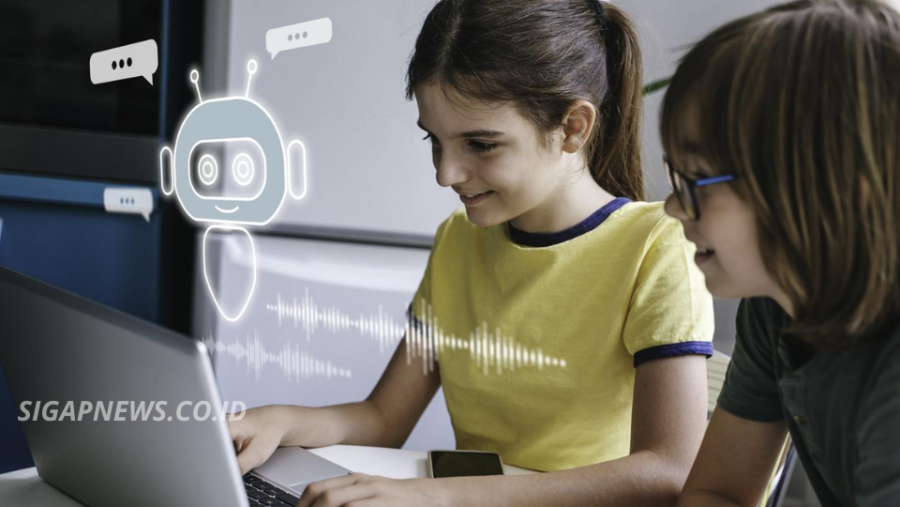
PARIS – Artificial intelligence is rapidly changing how students study around the world, but the latest Programme for International Student Assessment (PISA) results show that academic performance is continuing to decline. The OECD reported that 46% of students across OECD countries use AI chatbots at least weekly to help them learn.
PISA 2025 assessed more than 760,000 15-year-old students across 91 countries and economies. The results showed that average reading scores across OECD countries fell by 28 points from 2015 to 2025, while mathematics scores declined by 22 points. Science performance also weakened compared with previous assessments.
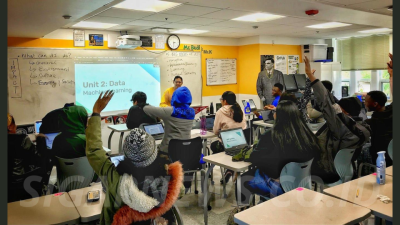
At the same time, AI has become one of the biggest changes in how students approach schoolwork. Students increasingly use chatbots to conduct preliminary research, summarize texts, draft assignments and support their understanding of lessons.
But the PISA data reveal a worrying association. Students who used AI for specific schoolwork tasks such as summarizing texts, conducting preliminary research or drafting written assignments scored around 20 points lower in science, on average, than students who did not use AI for those purposes. The difference is roughly equivalent to one year of schooling.
The OECD, however, cautions against interpreting the findings as proof that AI directly causes lower academic performance. The relationship between AI use and student achievement is complex and depends heavily on how the technology is used.
Students who use AI moderately for general learning purposes can perform slightly better than both intensive users and students who rarely use it. PISA also found that students who receive opportunities at school to develop AI literacy tend to use the technology more effectively.
Digital distraction is another growing concern. Around 28% of students across OECD countries said their classmates were distracted by digital devices during most or every science lesson. The OECD warns that excessive or unguided technology use can reduce attention and lead to shallower engagement with learning.
The decline in student performance, however, predates the rise of generative AI. The OECD says weakening educational outcomes have been developing for years and, in many education systems, began before the COVID-19 pandemic.
Reading is among the most concerning areas. Average reading performance across OECD countries dropped by 28 points between 2015 and 2025. Around 20% of 15-year-olds across OECD countries are now low performers in reading, mathematics and science simultaneously.
Indonesia is also experiencing the rapid adoption of AI in education. According to the OECD, 53% of Indonesian students reported using AI chatbots to help them learn at least once a week, compared with an OECD average of 46%. About 39% use AI to summarize texts, 32% for preliminary research and 30% to draft written assignments.
The findings suggest that the biggest challenge for education systems is no longer simply whether schools should allow AI. The more important question is how to make AI support students' thinking rather than replace it.
The OECD recommends using AI and digital tools carefully, moderately and with appropriate guidance. Technology can strengthen learning, but it should not replace students' attention, effort, understanding and ability to think independently.
Editor :Farros
Source : OECD, Reuters, Associated Press, The Wall Street Journal, Japan Times.