Indonesia Wildfire Emissions Become World’s Highest
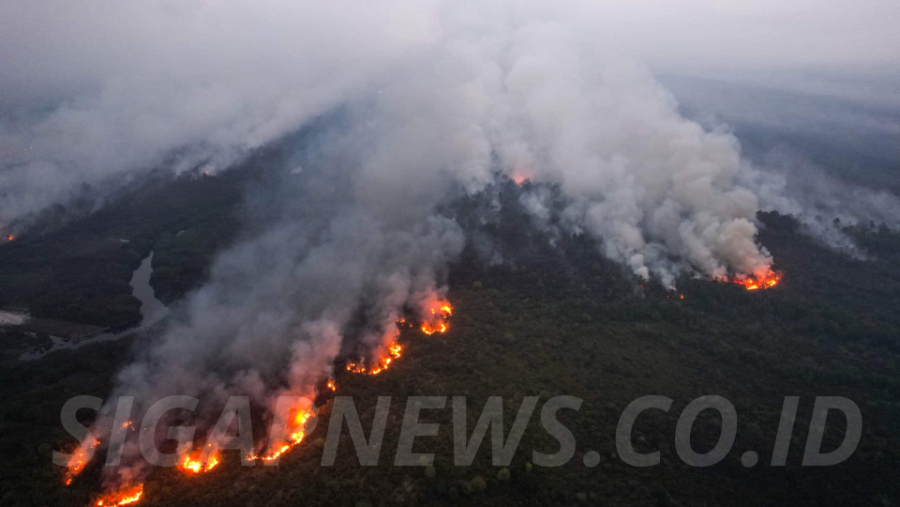
JAKARTA – Indonesia’s wildfires have become the world’s largest source of wildfire-related carbon emissions after fires released an estimated 19.7 million metric tons of carbon dioxide (CO?) between September 1 and 7, 2026.
The figure, reported by the European Union’s Copernicus climate monitoring service through its Fire Emissions Watch platform, accounted for more than one-third of global wildfire emissions during the period and surpassed Russia. The highest concentrations were recorded across parts of Kalimantan and eastern Sumatra, where extreme heat and drought have intensified fire activity.
Fire emission intensity in Indonesia exceeded 1,500 kilograms per square kilometer, more than ten times Russia’s level, according to data cited by CNA. Much of the burning is occurring across forest and peatland areas, where underground fires can be difficult to detect and extinguish.
The surge has been amplified by a strong El Niño weather pattern. Mark Parrington, a senior scientist at the Copernicus Atmosphere Monitoring Service, said El Niño was clearly intensifying seasonal fires across the region.
Indonesia recorded 13,443 fire hotspots between August 1 and September 8, compared with 9,454 during the same period in 2015, according to data cited by Reuters. The comparison has raised concerns because 2015 was one of Indonesia’s most severe wildfire years.
The estimated burned area has also risen sharply. Around 202,000 hectares were recorded as burned between January and July, while the August estimate alone reached roughly 600,000 hectares, Reuters reported.
The environmental crisis has also become a regional public-health issue. Smoke from Indonesian fires has crossed national borders, affecting Malaysia and other parts of Southeast Asia. Malaysia temporarily declared an emergency in Serian, Sarawak, after air pollution reached hazardous levels linked to smoke from fires in Indonesia.
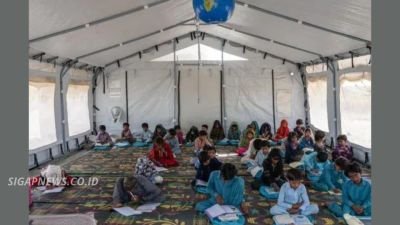
Inside Indonesia, hazardous air quality has disrupted education. More than 1.4 million students were reported to have shifted to remote learning in affected areas, according to the Associated Press.
Indonesia has intensified its response through ground operations, aerial firefighting and weather modification efforts. Japan has also sent three CH-47 Chinook helicopters and 180 personnel to assist firefighting operations in West Kalimantan.
Copernicus has warned that Indonesia’s seasonal fires could remain intense through the dry season. With extreme drought, high temperatures and vulnerable peatlands combining to accelerate fires, the 2026 crisis is emerging as a major environmental and climate story far beyond Indonesia’s borders.
Editor :Farros
Source : Reuters, CNA, Copernicus, AP, Ministry of Forestry of the Republic of Indonesia